

In this post, you’ll find a practical guide to the top places to visit in Málaga in 72 hours. This optimized guide will take you through history, art, seaside strolls, and mouthwatering gastronomy.
Imagine walking through sun-drenched streets, with the scent of sea salt and jasmine wrapping around you at every corner. Every nook of this coastal city holds a story waiting to be told, from ancient Arab walls to modern buildings reflecting on the Mediterranean Sea.
Also, keep in mind that Málaga is a key stop on the Mozarabic Way of St. James, adding an extra layer of history and culture to the city. And, of course, to complete your visit, I recommend dedicating your third day to exploring Ronda and Setenil de las Bodegas, two charming destinations full of character.
☞ Related Post: El Caminito del Rey, everything you need to know before you go
Top places to visit in Málaga in 72 hours: attractions
Attractions and experiences
For a first introduction to the city, free tours are a fantastic option, as they provide you with valuable insights and anecdotes that bring you closer to the local culture.
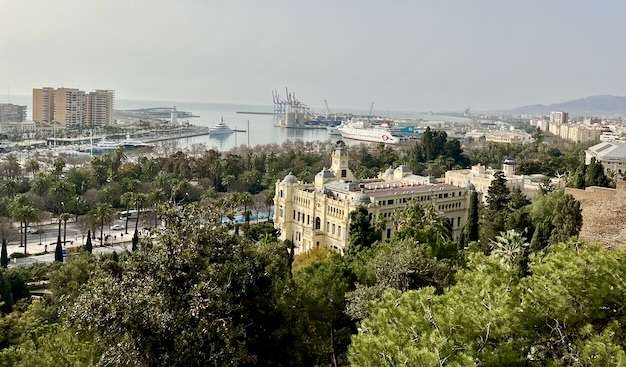
Here are a few recommendations: this free tour of Málaga, or this catamaran ride across the bay to admire the city from a unique perspective.
And to end your day in a relaxing way, there’s nothing better than unwinding at the Hammam Al-Andalus, located in Málaga’s ancient medina.
Where to stay in Málaga
Málaga offers a wide range of accommodations, from luxury hotels to budget-friendly options.
To make your selection easier, I recommend the place where I stayed: Hotel Guadalmedina. It’s conveniently located near the Renfe and Cercanías train stations, right next to the Soho district, and just a 10-minute walk from Calle Larios.
Where to eat in Málaga
In Málaga, you can’t miss trying the ‘espeto de sardinas’, sardines grilled over an open flame right by the sea, offering an authentic taste of the coast.
And don’t forget to sample ‘ajoblanco’, a traditional and refreshing cold soup made from almonds and garlic—a true delight for your taste buds!
Restaurants:
- Ultramarinos Benjamin
- El rincón de Lola
- Reserva 12
- La Cosmopolita
Coffe Shops:
- Santa Coffee
- Julieta Coffee
- Dulce Dreams
Brewery:
- La Fábrica del Soho to taste craft beers
Top places to visit in Málaga in 72 hours: itinerary
☑︎ The Gibralfaro Castle
Start your visit with the best panoramic views of the city. The Gibralfaro Castle, with its ancient walls, offers you a unique perspective of Málaga, the port, and the Mediterranean Sea.
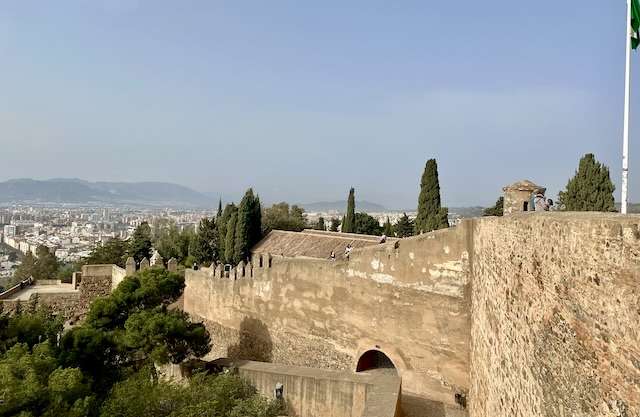
This castle is an iconic fortress of Málaga, perched on a hilltop 130 meters above sea level.
Its name comes from the Arabic Jabal-Faruk, meaning “mountain of the lighthouse,” referring to an ancient Phoenician lighthouse that once stood on the site.
The current fortress was built in the 14th century by the Nasrid King Yusuf I to protect the nearby Alcazaba and to house troops.
As a historical note, during the siege of Málaga in 1487, the castle held out for three months before finally surrendering to the Catholic Monarchs.
How to get to the Gibralfaro Castle:
On foot:
If you feel like walking, you can reach the castle on foot from Málaga’s city center by following a path that starts near the Alcazaba, on Guillén Sotelo Street.
The hike takes approximately 20 minutes, and along the way, you’ll find several viewpoints offering stunning panoramic views of the city and the port.
I recommend wearing comfortable shoes, a hat, and bringing water, especially during the hotter months.
By public transport:
Bus line number 35 connects Málaga’s city center with the castle. The stops are located at central points such as Plaza de Toros and Paseo de Reding, and the bus will drop you off right at the entrance of the fortress.
▹ Opening Hours:
- Summer season (April to Octobre): From 9 am to 8 pm.
- Winter season (November to March): From 9 am to 6 pm.
Keep in mind that the ticket office closes 45 minutes before the castle’s closing time.
▹ Entrance fees:
- General admission: €3,50
- Combined ticket (Gibralfaro Castle and Alcazaba): €5,50
- Free Admission: Every Sunday from 2 pm onwards.
☑︎ Alcazaba and Roman Theater
After enjoying the views from Gibralfaro Castle, I recommend heading down to the Alcazaba, an impressive Moorish fortress, and the Roman Theatre, located right at its base.
With these visits, you’ll dive deep into Málaga’s rich history, exploring its Roman and Moorish roots.
The Alcazaba
The Alcazaba is a palatial fortress built in the 11th century by Málaga’s Muslim rulers. It served both as a residence for the governors and as a defensive stronghold against potential invaders.
Its architecture blends defensive features with the elegance of Andalusian palaces, featuring courtyards, gardens, and fountains that reflect the sophistication of the era.
▹ Opening hours:
- Summer season (April to October): From 9 am to 8 pm.
- Winter season (November to March): From 9 am to 6 pm.
▹ Entrance fees:
- General admission: €3,50
- Combined ticket (Gibralfaro Castle and Alcazaba): €5,50
- Free Admission: Every Sunday from 2 pm onwards.
Roman Theater
The Roman Theatre, discovered in 1951, is one of the oldest remains of the city, dating back to the 1st century BC, during the reign of Emperor Augustus.
It was in use until the 3rd century, after which it was abandoned and partially covered by other constructions. Today, it stands as an important testimony to Málaga’s Roman history.
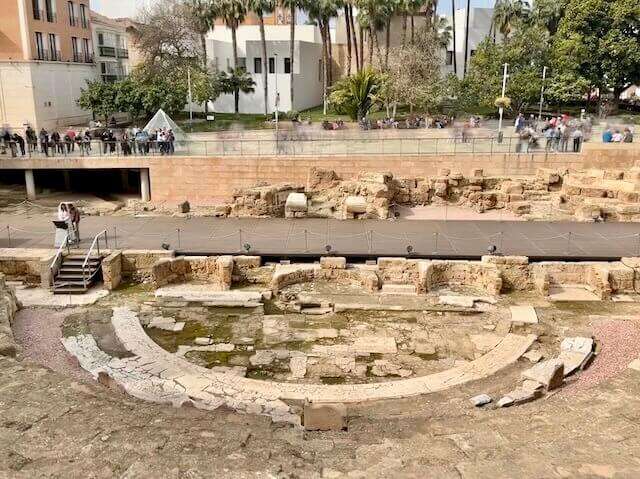
As a curious fact, you might have noticed the glass pyramids next to the Roman Theatre. These mark the spot where remains of an ancient Roman factory lie underground, where they produced a highly prized fish sauce.
Here’s an interesting detail: to make it, they used fish guts and intestines, marinated them with salt and spices, and left them to ferment in the sun for three months. The result? A sauce that was sold at an extremely high price. Can you believe it?
▹ Opening hours:
- From Tuesday to Saturday: 10 am to 6 pm. Sunday and Bank holiday: from 10 am to 4 pm.
▹ Admission fee:
- Free
☑︎ Málaga Cathedral (“La Manquita”)
Among the most important places to see in Málaga in 72 hours, the Cathedral stands out, popularly known as “La Manquita” due to its unfinished tower.
Its construction began in 1528 on the remains of an old mosque after the Christian Reconquest and continued until 1782, although it was never fully completed.
Thanks to this peculiarity, the cathedral combines Renaissance and Baroque styles, giving it a unique character and making it one of Málaga’s most emblematic monuments.
▹ Opening hours:
- November to March:
Monday to Friday: 10 am to 6.30 pm
Saturday: 10 am to 6 pm
Sunday and Bank Holiday: 2 pm to 6 pm. - April to June and October:
Monday to Friday: 10 am to 8 pm
Saturday: 10 am to 6 pm
Sunday and Bank Holiday: 2 pm to 6 pm - July to September:
Monday to Friday: 10 am to 9 pm
Saturday: 10 am to 6 pm
Sunday and Bank Holiday: 2 pm to 6 pm.
Note: The last admission is allowed 45 minutes before closing time.
▹ Entrance fee:
- General admission: €10 (audio guide included).
Note: Tickets can be purchased directly at the Cathedral’s entrance or through its official website.
▹ Rooftops visit:
For panoramic views of the city, the Cathedral offers the option to visit its rooftops for an additional fee. These tickets can be purchased combined with the general admission ticket.
In addition to its imposing façade, the interior of Málaga Cathedral stands out for its magnificent choir carved by Pedro de Mena and its impressive stained glass windows, among other artistic treasures.
☑︎ Archbishop’s Palace
Right next to the Cathedral, a building with an ochre and reddish-colored façade catches the eye. It’s the Archbishop’s Palace, a late Baroque construction from the 16th century
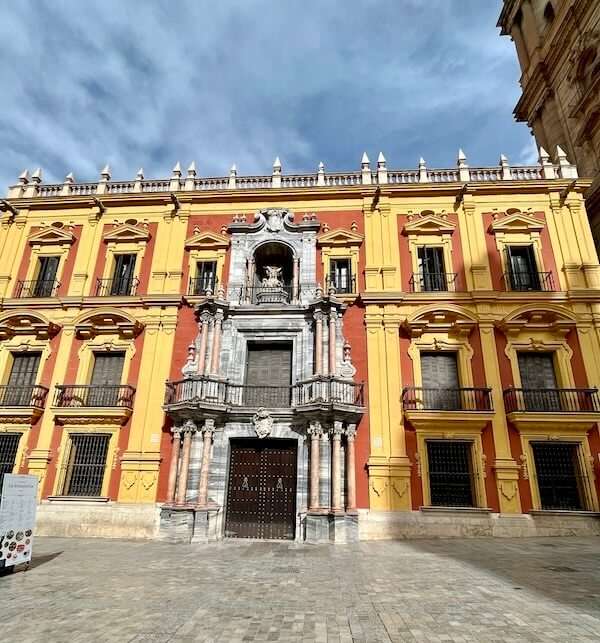
Although it’s not always open to the public, its exterior is well worth a stop to admire its details, such as its entrance façade, featuring an image of the Virgin of Sorrows (Virgen de las Angustias).
☑︎ Larios Street
Larios Street is the most famous and emblematic avenue in Málaga. Inaugurated in 1891, this pedestrian street stands out for its elegant design and its always lively atmosphere.
Here, you’ll find a wide variety of shops, cafés, and boutiques, making it the perfect place to stroll, shop, or simply enjoy the surroundings.
During celebrations such as Holy Week or Christmas, the street transforms with spectacular decorations that are truly worth seeing.
☑︎ The Picasso Museum Málaga
The Picasso Museum Málaga is one of the most important places to discover the work of the famous Málaga-born painter, Pablo Picasso. Here, you can not only admire the artist’s legacy but also understand his impact on art history.
The museum was inaugurated in 2003 and is located in the Buenavista Palace, a building declared a National Monument for its combination of Andalusian Renaissance architecture with modern details.
In its halls, you’ll find pieces ranging from Picasso’s early works to those reflecting his mature style, with examples from his Cubist, Surrealist, and Neoclassical periods. In total, more than 200 works by the artist are on display.Additionally, the museum offers temporary exhibitions, workshops, and cultural activities.
▹ Opening hours:
- Everyday: 10 am to 7 pm.
▹ Entrance fees:
- General admission: €12 (permanent exhibition).
- Free admission: Every Sunday during the last two hours of opening hours.
Top places to visit in Málaga in 72 hours
☑︎ Centre Pompidou Málaga
Another must-see spot in Málaga during a 72-hour visit is the Centre Pompidou Málaga. Located in the port area (Muelle Uno), this modern and contemporary art center is an extension of the famous Parisian museum.
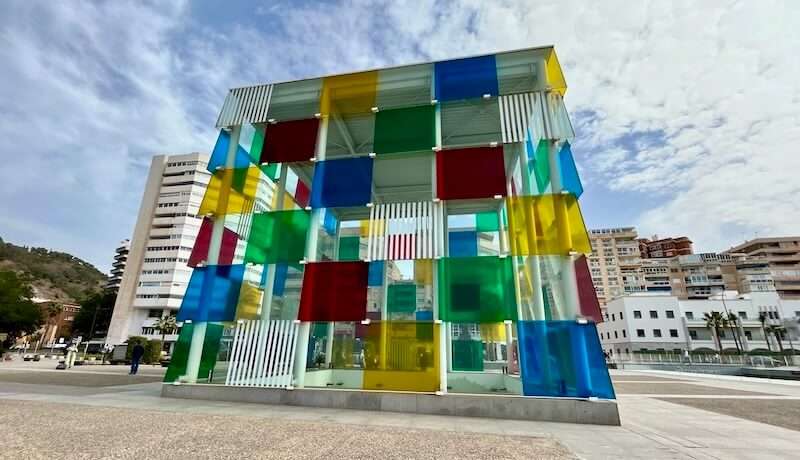
Inaugurated in 2015, the Centre Pompidou Málaga hosts a permanent collection and temporary exhibitions dedicated to modern and contemporary art.
The building stands out for its multicolored cube-shaped structure, known as “El Cubo”, designed by architect Daniel Buren. Inside, you can admire works by artists such as Frida Kahlo, Pablo Picasso, Salvador Dalí, and René Magritte.
In addition to its exhibitions, the center offers workshops, cultural activities, and educational programs, making art accessible to all audiences.
▹ Opening hours:
- Wednesday to Monday: 9,30 am to 8 pm.
▹ Entrance fees:
- General admission: €9
- Free admission: Every Sunday from 4 pm onwards.
☑︎ Stroll along Muelle Uno and La Farola
When talking about tourism in Málaga, Muelle Uno is an essential stop that perfectly complements a visit to the Centre Pompidou, located in the same area.
After exploring the museum’s exhibitions, you can step out directly into this open space by the sea to continue enjoying the surroundings.
Muelle Uno combines shops, restaurants, and leisure spaces with spectacular views of the port and the city. It’s the perfect spot for a stroll, to sit on a terrace and savor local cuisine, or simply relax while watching the boats come and go.
At the end of the promenade, you’ll find La Farola, one of the few lighthouses with a feminine name in Spain and an emblematic symbol of Málaga.
Throughout the year, Muelle Uno also hosts markets, concerts, and cultural events, making it a lively and dynamic space.
Don’t miss the chance to visit during sunset, when the sky turns shades of orange and pink, creating a magical backdrop for an unforgettable moment by the sea.
☑︎ Atarazanas Market, A must-visit in Málaga
Personally, the Atarazanas Market is also an essential stop in Málaga, and one of the most authentic places in the city. Located in a 14th-century Nasrid shipyard, this market stands out for its impressive Arabic-style entrance gate and its large stained-glass window, which depicts some of Málaga’s most important landmarks.
Inside, you’ll find a wide variety of fresh products: fruits, vegetables, fish, seafood, and traditional regional cold cuts. Additionally, many stalls offer freshly prepared tapas and pinchos, making it an ideal spot for a gastronomic break.
The market serves as a meeting point for both locals and visitors, offering a perfect opportunity to enjoy Málaga’s cuisine in its most authentic form.
▹ Opening hours:
- Monday to Saturday: 8 am to 3 pm.
☑︎ Soho: The Arts District
Another must-visit spot in the city of Málaga is Soho, also known as the Arts District. Located near the historic center, between Alameda Principal Avenue and Muelle de Heredia, this neighborhood has undergone an incredible transformation.
Did you know that this area has evolved from being a run-down area to becoming a vibrant hub of creativity and cultural life?
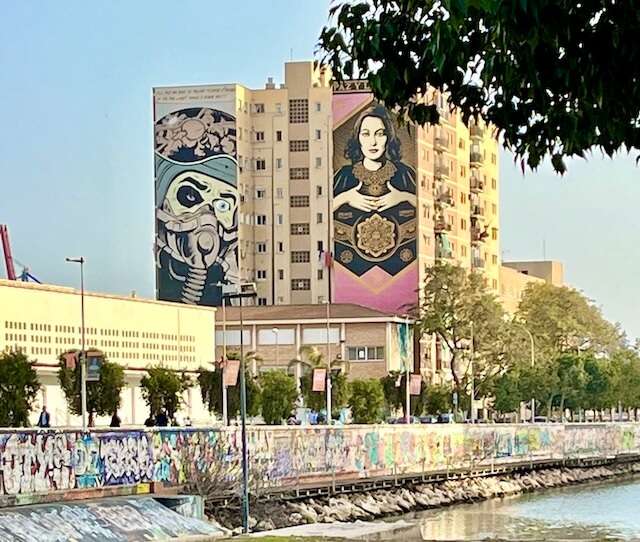
Street art takes center stage in Soho. Its streets are filled with giant murals, graffiti, and works by both local and international artists, making it a true open-air museum.
The most famous graffiti can be found around the CAC (Contemporary Art Center) and along Barroso, Trinidad Grund, and Casas de Campo streets.
Here, you’ll also find the Soho Theatre, several art galleries, alternative shops, charming cafés, and modern restaurants—the perfect combination for spending a unique afternoon in the city.
In short, Málaga’s Soho is not only a cultural landmark but also a remarkable example of how art can transform and revitalize an entire neighborhood.
☑︎ La Malagueta Beach
As a perfect end to your visit to Málaga, there’s nothing better than relaxing at La Malagueta Beach. Located just a few minutes from the city center, it’s easily accessible both on foot and by public transport.
With its dark sand and calm waters, La Malagueta Beach is the perfect spot for a refreshing swim, sunbathing, or simply unwinding after exploring the city.
As with 300 days of sunshine a year, Málaga almost always offers the perfect weather to enjoy the beach.
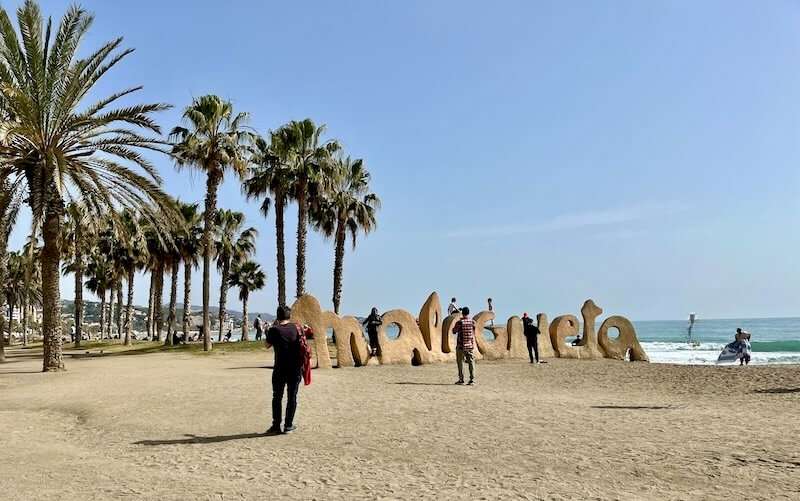
Along its promenade, also you’ll find plenty of chiringuitos (beachside restaurants) where you can savor typical dishes such as grilled sardine skewers (espetos de sardinas) or fried fish (pescado frito).
And of course, the beach is equipped with all the necessary amenities, including showers, hammock rental and playgrounds for children, for a comfortable and enjoyable experience.
Top places to visit in Málaga in 72 hours: Overview
As you’ve seen, Málaga is much more than just sun and beaches. It’s a city of history, culture, and delicious food. Here, you can explore impressive landmarks like the Alcazaba, enjoy art in modern museums, and savor sardine skewers (espetos) by the sea.
In fact, the city effortlessly blends tradition with modernity, making every stroll an interesting experience.
And if you can spare an extra day, I highly recommend a trip to Ronda and Setenil de las Bodegas—two charming towns with breathtaking landscapes that will amaze you.
On the other hand, if you’re looking for inspiration to explore similar destinations, check out these getaways.