

Travel Guide to Argentina: Explore on Your Own. Argentina is a destination that captivates with its diversity and beauty. When thinking about this country, it’s easy to picture its breathtaking landscapes, the unique colors of the north, the Iguazú Falls, the vibrant energy of Buenos Aires with its tango-filled corners, and countless places waiting to be explored.
But where should you start? Traveling independently through Argentina is an incredible experience, although it requires some planning to make the most of every moment.
In this travel guide to Argentina, you’ll find all the practical information you need: documentation, the best time to visit, tips on currency, internet, health recommendations, and, of course, the most stunning regions you simply cannot miss.
Travel guide to Argentina: places to visit
As you know, Argentina is an incredibly vast country, offering a wide variety of landscapes and destinations to explore. It boasts mountains, glaciers, jungles, deserts, and bustling cities full of life. Exploring it entirely takes time, so chances are you’ll need more than one trip to truly discover each of its regions.
Every region in Argentina offers unique experiences in culture, gastronomy, and nature, making it feel as if you’re visiting a different country with every stop.
- 📍 Buenos Aires: Argentina’s vibrant capital is the perfect starting point. Explore its historic neighborhoods like San Telmo, the elegance of Recoleta, and the colorful charm of La Boca.
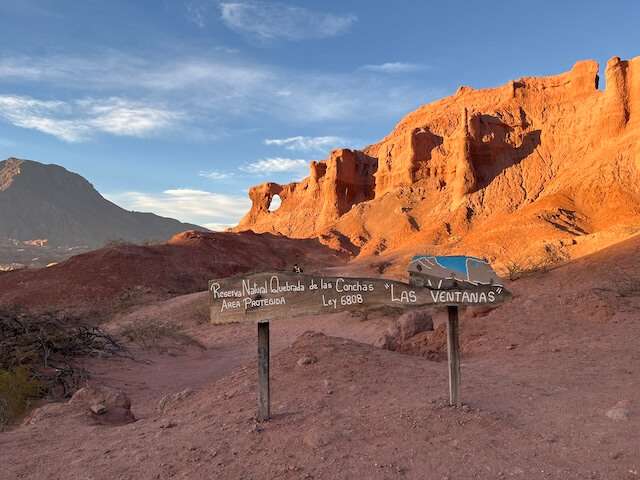
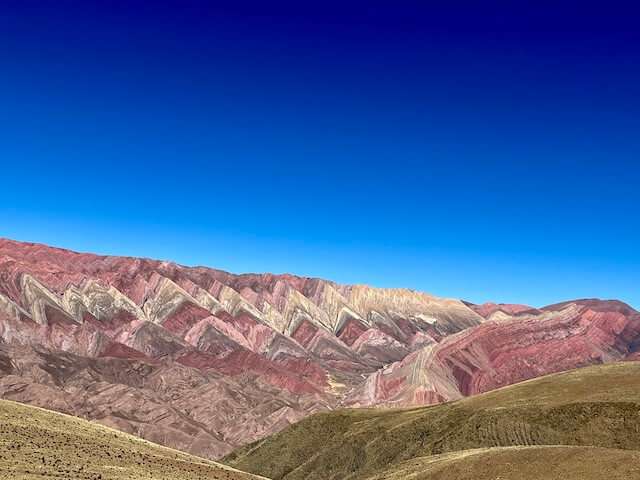
- 📍 Norte de Argentina: A stunning blend of arid landscapes and multicolored mountains. Must-visit spots include Purmamarca, the magical Quebrada de Humahuaca, the charming village of Iruya, and the iconic Train to the Clouds.
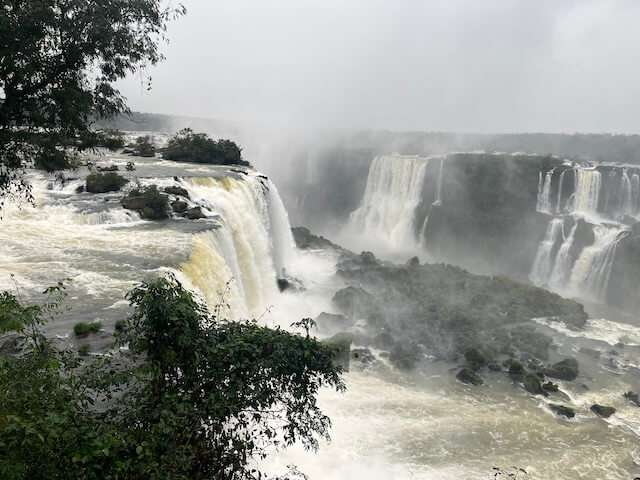
- 📍 Cataratas del Iguazú: Located in the province of Misiones, these falls are one of the Seven Natural Wonders of the World. A breathtaking natural spectacle you simply can’t miss!
- 📍 Cafayate y Tafí del Valle: Known for their picturesque vineyards and mountain landscapes, these destinations offer exquisite wines and an unmatched sense of tranquility.
- 📍 Patagonia: In the south, Argentine Patagonia awaits with its majestic glaciers like the Perito Moreno and fairy-tale landscapes in places such as Bariloche and El Chaltén.
- 📍 Mendoza: If you’re a wine lover, this region is your paradise. Tour its wineries and savor some of the world’s best Malbec wines against the stunning backdrop of the Andes Mountains.
Travel guide to Argentina: Practical Information
Let’s start with the basic information so you can plan your trip on your own:
Passport and Visa requirements for entering Argentina
Before starting your adventure in Argentina, the first thing you need to check is your travel documentation. Depending on your country of origin, the requirements for entering the country may vary, but here’s the essential information to ensure you avoid any surprises:
Do you need a visa to enter Argentina?
- Citizens of the European Union, the United States, Canada, Australia, and most Latin American countries: You do not need a visa for tourist trips of up to 90 days. You only need a valid passport with at least 6 months of validity from your date of entry.
- Other countries: If your country does not have a visa exemption agreement with Argentina, you will need to apply for a tourist visa at the Argentine embassy or consulate in your country.
Upon entering Argentina, you will receive an entry stamp in your passport indicating your maximum stay date. Make sure you have a valid passport, a return ticket, and a reservation for your first accommodation.
Flights
In order to find affordable flights, I recommend using the meta-search engine Skyscanner, especially its “Whole Month” and “Cheapest Month” tools. If you’re flexible with your dates, it will make it much easier to find affordable flights.
From Madrid, you can fly with Aerolíneas Argentinas and Iberia.
Weather in Argentina: best time to visit
Argentina is a huge and diverse country, which means its climate varies significantly from one region to another. From the majestic glaciers in the south to the subtropical jungles in the north, each area has its ideal time to visit.
Here’s a practical guide to ensure the weather doesn’t ruin your plans.
The seasons in Argentina
- Spring: September – November
- Summer: December – February
- Autumn: March – May
- Winter: June – August
☞ Key Fact:
Being in the Southern Hemisphere, the seasons are opposite to those in Europe and North America. For example, while it’s winter in Spain, it’s summer in Argentina.
Best time to travel according to the region
- 🌵 NorthernArgentina (Salta, Jujuy, Cafayate, Iguazú)
- Best time: April to October (dry season).
- Avoid: The summer months (December to March), as heavy rains are common, especially in Iguazú.
- Typical climate: Subtropical in Iguazú, arid in Salta and Jujuy.
2. 🏙️ Buenos Aires and Central Argentina
- Best time: Spring (September to November) and Autumn (March to May).
- Avoid: Summer (December to February) if you don’t handle humid heat well.
- Typical climate: Humid temperate.
3. ❄️ Patagonia and Tierra del Fuego
- Best time: Summer (December to February).
- Avoid: Winter (June to August), as many routes and parks may be closed.
- Typical climate: Cold and windy.
4. 🍇 Cuyo (Mendoza and Surroundings)
- Best time: Spring (September to November) and Autumn (March to May).
- Typical climate: Dry and sunny, perfect for the grape harvest season in the wineries.
Argentina’s currency
The official currency of Argentina is the Argentine peso (ARS), but if there’s one thing that defines the country, it’s its economic volatility and the fluctuations in the exchange rate.
That’s why managing your money wisely during your trip is key to avoiding surprises and making the most of your budget.
What currency should you bring to Argentina?
US Dollars (USD) or Euros (EUR): These are the most widely accepted foreign currencies for exchange in Argentina.
☞ Tip:
Don’t rely solely on credit/debit cards. While they work well in major cities like Buenos Aires, in rural areas they might not be accepted, or you could face high fees.
Exchange rates in Argentina
In this travel guide to Argentina, I advise you that along the country, you’ll find several exchange rates, and it’s important to understand them to avoid losing money:
- Official Exchange Rate: Set by the government, but it’s usually less favorable for tourists.
- “Blue” Exchange Rate (Informal): A parallel exchange rate, much more favorable, but not official.
- MEP Dollar or Card Rate: Applied when you pay with a foreign credit or debit card, offering an intermediate rate between the official and blue exchange rates.
Travel guide to Argentina: language
Spanish is spoken in Argentina, but with a very particular style that differentiates it from the Spanish heard in Spain. Here, Spanish has a melodic accent, a characteristic use of “vos” instead of “tú” and a rich mixture of words from lunfardo, the local slang.
Travel guide to Argentina: fun facts of the Argentine language
🗨️ Use of “Vos” Instead of “Tú”:
It’s very common to replace “tú” with “vos”.
- “¿Vos querés un mate?” instead of “¿Tú quieres un mate?”
🗨️ Pronunciation:
The letters “LL” and “Y” are pronounced like a soft “sh” sound.
- “¿Cómo te llamás?” sounds like “¿Cómo te shamás?”
🗨️ Lunfardo (Local Slang):
- Che: Used to get someone’s attention. “Che, ¿vamos a tomar algo?”
- Pibe/Piba: Boy/Girl.
- Bondi: Bus.
- Birra: Beer.
- Laburar: To work.
🗨️ Common Expressions:
- In Argentina, they don’t say “vale”; they say “dale” (Alright/Okay).
- You won’t hear “tío/tía” to refer to a friend, but rather “boludo/boluda”, which, despite its literal meaning, can often be affectionate among friends.
Electricity in Argentina
One of the practical details we often overlook when traveling is the issue of plugs and electricity.
- Voltage: 220 V
- Frequency: 50 Hz
If you’re coming from Spain or other European countries, you’ll likely be able to plug in your devices without any problems if they have Type C plugs.
However, if you’re traveling from the United States, United Kingdom, or Asia, you’ll need a universal adapter that includes the Type I plug.
Travel guide to Argentina: Internet
Staying connected while traveling in Argentina by yourself is essential for checking maps, finding restaurant recommendations, or sharing your photos on social media.
Fortunately, internet access in Argentina is fairly accessible and varied, although the connection quality can vary depending on the region.
Even so, you’ll typically find free Wi-Fi in most hotels, restaurants, cafés, and airports. However, in rural areas, the connection tends to be much slower.
How to get internet in Argentina?
You have several options to stay connected:
Local SIM Card:
This is the most affordable and practical option if you plan to stay in Argentina for several days.
The main providers are: Claro, Movistar, and Personal.
You can buy a SIM card at airports, official stores, or kiosks. Don’t forget to bring your passport, as it’s required for registration.
The cost is approximately $5 to $15 USD for a 1-month data package.
eSIM (Virtual SIM):
Ideal if your phone is compatible with this technology and you can purchase and activate a data plan virtually before arriving in Argentina.
The most popular providers are: Airalo, Holafly, and Nomad.
Vaccinations
If you’re traveling from Spain, there are no mandatory vaccines required to enter Argentina.
However, it’s recommended to be up-to-date with the following vaccines:
- Hepatitis A
- Hepatitis B
- Tetanus
- Yellow Fever (especially if you plan to visit jungle regions).
Additionally, always make sure to have good travel insurance to cover any medical needs during your trip.
Mosquito-Borne diseases
In some regions of northern Argentina, especially in summer, diseases such as dengue, Zika or Chikungunya may appear, so it is important to follow these basic recommendations to avoid mosquito bites:
- Use mosquito repellent containing DEET.
- Wear long-sleeved and light-colored clothing.
- Sleep under mosquito nets in high-risk areas.
Travel insurance
As I just mentioned, travel insurance is essential for every traveler, regardless of their medical condition. As you know, accidents can happen at any moment, and moreover, engaging in potentially risky activities, such as hiking in Patagonia or exploring remote regions, can increase the risk of injury.
In addition, without travel health insurance, you run the risk of incurring high expenses, such as emergency evacuation. For this reason, in this travel guide to Argentina, I suggest you to arrange travel medical insurance before traveling. I recommend Intermundial, which is the one I personally use, as I have always had a good experience with them.
📢 If you book through this link, you’ll receive a 10% discount on your travel insurance as a My Lifetime Journey reader.
► Post relacionado:
Why you need a travel insurance for your next adventure
Travel guide to Argentina: How to get around
Given the extension of the country, getting from one point to another takes time. However, you can choose among several options to get around independently.
Below, I’ll explain the main alternatives for getting around and making the most of your trip.
Car rental
This is, without a doubt, my favorite option, especially if there are several of you to drive. You can combine it with trains or flights to save time on longer routes. However, if you prefer to enjoy the scenery and experience the journey from a more local perspective, the bus is an equally interesting and more budget-friendly alternative.
Renting a car is an excellent choice for exploring natural regions like the north (Salta and Jujuy) or Patagonia, as it offers flexibility with schedules and allows access to less touristy spots.
However, the long distances and the condition of some roads can make the trip challenging. It’s essential to plan routes carefully and refuel in advance to avoid setbacks.
You can check car rental options at this link.
Domestic flights
If you prefer to save time on very long journeys, domestic flights are a great option. They’re not particularly expensive if you book in advance, as you can fly with local airlines such as Flybondi or Aerolíneas Argentinas.
☞ Tip:
As part of this travel guide to Argentina, I recommend that you avoid carrying too much luggage, as overweight fees are usually high. Charges often apply for baggage exceeding 8 to 10 kg.
Train
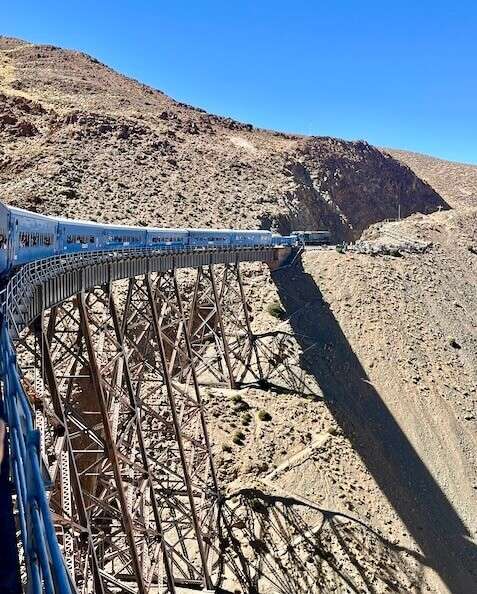
For specific routes, trains are an interesting alternative, especially on tourist routes like the Tren a las Nubes in Salta or the journey from Buenos Aires to Córdoba. However, take into account that the rail network is limited and is usually more of a scenic experience than an efficient mode of transportation.
Bus (Colectivo)
Long-distance buses are the most popular means of transport for travelers in Argentina, thanks to their extensive coverage and comfortable reclining seats, available in semi-cama and cama options.
However, journeys can be extremely long (for example, traveling from Buenos Aires to Salta takes over 20 hours).
When traveling by bus, I recommend choosing well-known companies like Flecha Bus, Andesmar, and Vía Bariloche, which are both affordable and reliable.
Taxis
Within cities, taxis and ride-sharing apps like Uber, Cabify, or DiDi are practical options for short trips. However, traditional taxis can be more expensive if the fare isn’t agreed upon in advance.
If you choose a traditional taxi, try to take one from an official taxi stand or request one through your accommodation to avoid scams or overcharging.
Gastronomy
In this travel guide to Argentina, gastronomy is a must. The Argentine cuisine is rich, diverse, and deeply rooted in tradition, with a strong European influence, especially from Italy and Spain. Still, its dishes have a unique identity that makes them unmistakable.
The asado is the star of Argentine cuisine, an experience that goes beyond just a meal. Prepared with high-quality cuts of meat, such as bife de chorizo or vacío, it’s slowly cooked over hot coals and served with chimichurri, a sauce made with garlic, parsley, vinegar, and spices.
Another must-try dish is the empanada, small stuffed pastries that vary by region: filled with beef, ham and cheese, chicken, or even sweet versions. In the north, salteñas empanadas are the most famous.
The mate, an infusion made from yerba mate leaves, is more than just a drink—it’s a cultural symbol and a daily tradition for Argentines.
Other iconic dishes include the milanesa (similar to breaded steak), locro (a traditional stew made with corn, meat, and sausages), and, of course, sweet treats like alfajores and the irresistible dulce de leche, which is found in almost every dessert.
Travel guide to Argentina by yourself, Overview
Traveling Argentina on your own is a unique experience that combines breathtaking landscapes, a vibrant culture, and delicious cuisine. From the history-filled streets of Buenos Aires to the colorful landscapes of northern Argentina and the majesty of the Iguazú Falls, this country offers unparalleled diversity.
However, due to its large size and the variety of regions, it’s essential to carefully plan each stage of your journey and choose the right means of transportation to make the most of your time.
In this travel guide to Argentina by yourself, I’ve provided you with key information on documentation, climate, transportation, and practical tips to help you plan your adventure.
So, get ready to explore, discover, and enjoy every corner of this amazing destination!